Eczema is one of the most common skin conditions in the United States, affecting millions of children and adults every year. But despite how common it is, eczema is often misunderstood. Many people assume it’s simply dry skin or an occasional rash that comes and goes with the weather. In reality, eczema is a chronic inflammatory condition that affects the skin’s protective barrier, making it more vulnerable to irritation, moisture loss, and flare-ups.
For some people, eczema appears as occasional itchy patches during the winter. For others, it becomes a persistent cycle of dryness, inflammation, and scratching that affects sleep, concentration, confidence, and daily comfort. Symptoms can look different depending on age, skin tone, environment, and individual triggers, which is one reason eczema can feel frustratingly unpredictable.
The good news is that eczema is manageable. Understanding how eczema affects the skin barrier, what causes flare-ups, and how treatment has evolved can help you better care for your skin and recognize when it’s time to seek professional support.
In this article:
- What Is Eczema?
- What Does Eczema Look and Feel Like?
- Eczema in Skin of Color
- Eczema in Babies and Children
- What Causes Eczema Flare-Ups?
- Why Does Eczema Keep Coming Back?
- Can Stress Really Make Eczema Worse?
- Daily Eczema Management
- Treatment Options for Eczema
- When to See a Dermatologist
- Living Well with Eczema
What Is Eczema?
Eczema itself is actually a group of conditions that cause inflammation, irritation, and disruption of the skin barrier. The most common form is atopic dermatitis, which often begins in childhood but can affect people at any age.
Healthy skin acts as a protective barrier. It helps keep moisture in while blocking irritants, allergens, bacteria, and other environmental stressors from entering. In people with eczema, that barrier does not function as effectively. Moisture escapes more easily, while irritants and allergens penetrate the skin more readily, triggering inflammation and itching.
This helps explain why eczema-prone skin often feels dry, sensitive, and reactive. Everyday exposures that might not bother someone else, like cold air, fragranced products, sweat, stress, or rough fabrics, can trigger flare-ups because the skin barrier is already compromised.
Eczema is not contagious, and it is not caused by poor hygiene. It is considered a chronic condition, meaning symptoms could come and go over time. Some people experience mild seasonal flare-ups, while others deal with more persistent symptoms that require medical treatment.
What Does Eczema Look and Feel Like?
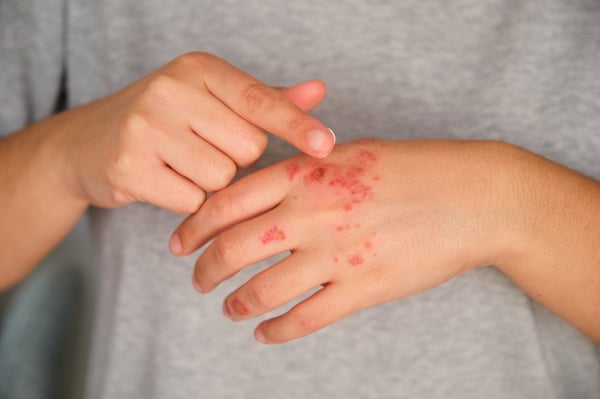
Eczema can appear differently from person to person, which is one reason it’s often confused with other skin conditions. Symptoms may range from mild dryness to intensely itchy, inflamed skin.
Common symptoms include:
- Dry or rough patches of skin
- Persistent itching
- Redness or discoloration
- Cracking or scaling
- Thickened skin from repeated scratching
- Small bumps that may ooze or crust over
One of the hallmarks of eczema is itching. In many cases, the itching becomes severe enough to disrupt sleep or lead to scratching that further damages the skin barrier. This creates what dermatologists often call the “itch-scratch cycle”: Itching leads to scratching, which worsens inflammation and causes even more itching.
The location of eczema can also vary by age. Infants and toddlers often develop eczema on the cheeks, scalp, arms, and legs. Older children and adults more commonly experience flare-ups in skin folds such as the elbows, knees, wrists, neck, or hands.
Eczema in Skin of Color
Eczema does not look the same on every skin tone. In lighter skin, eczema often appears red or pink. In darker skin tones, however, eczema may appear purple, gray, dark brown, or as areas of lighter or darker pigmentation.
Because many educational resources only show eczema on lighter skin, eczema in skin of color can sometimes be overlooked or misidentified. Some patients may also experience more noticeable pigment changes after inflammation resolves.
In addition, eczema in darker skin tones may appear more papular, meaning it develops as small bumps rather than large red patches. Thickened or textured skin can also be more prominent in chronic cases.
Recognizing these differences is important because early diagnosis and treatment can help reduce discomfort and minimize long-term skin changes.
Eczema in Babies and Children
Eczema is especially common in infants and young children. Many parents first notice dry, irritated patches on their child’s cheeks, scalp, or arms during the first year of life.
Children with eczema often have very sensitive skin and may become uncomfortable or fussy during flare-ups. Nighttime itching can interfere with sleep for both children and parents, and scratching may lead to open sores or infection.
Several factors can contribute to childhood eczema flare-ups, including:
- Dry weather
- Heat and sweat
- Fragranced products
- Certain detergents or soaps
- Rough fabrics like wool
- Saliva or drooling around the mouth
- Stress or illness
There is also a strong genetic component. Children with a family history of eczema, asthma, or seasonal allergies are more likely to develop eczema themselves.
For many children, symptoms improve with age. Others may continue to experience eczema into adolescence and adulthood. Establishing good skin-care habits early can help reduce flare frequency and improve comfort over time.
What Causes Eczema Flare-Ups?
One of the most frustrating aspects of eczema is that symptoms can seem unpredictable. Skin may remain relatively calm for weeks or months before suddenly becoming inflamed again.
In reality, eczema flare-ups are often connected to a combination of triggers rather than a single cause. Understanding your personal triggers is one of the most important parts of long-term eczema management.
Environmental Triggers
Dry air is one of the most common eczema triggers, especially during colder months when indoor heating further reduces humidity levels. Hot weather and sweating can also irritate sensitive skin.
Other environmental triggers may include:
- Fragrance in skin-care products
- Harsh soaps or cleansers
- Laundry detergents
- Smoke
- Dust mites
- Pet dander
- Pollen
Even water exposure can contribute if it strips the skin of natural oils.
Lifestyle Triggers
Stress plays a significant role in eczema flare-ups for many people. Emotional stress can increase inflammation in the body and worsen itching. Sleep disruption, overheating during exercise, and wearing irritating fabrics can also contribute. Some people notice flare-ups after drinking alcohol or eating certain foods, though food triggers vary widely from person to person.
Biological Triggers
Illness and infections can worsen eczema symptoms, especially in children. Skin with eczema is also more vulnerable to bacterial infections because the skin barrier is weakened.
Allergies and asthma are commonly associated with eczema as well. Many people with eczema are part of what doctors call the “atopic triad,” meaning they may also experience seasonal allergies or asthma.
Why Does Eczema Keep Coming Back?
One of the most frustrating parts of eczema is that it often seems to improve, only to flare up again weeks or months later. Many patients wonder whether they are doing something wrong, or why treatment didn’t “fix” the problem permanently.
The answer lies in the nature of eczema itself. Eczema is not simply a temporary rash; it is a chronic condition tied to inflammation and a weakened skin barrier. Even when the skin appears calm on the surface, the barrier may still be more vulnerable than normal skin.
That means flare-ups can happen when the skin encounters triggers such as dry weather, stress, illness, allergens, harsh products, or excessive scratching. In many cases, multiple triggers combine at once. For example, cold winter air may dry out the skin while stress and disrupted sleep further increase inflammation and itching.
This is why eczema management is usually focused on long-term control rather than short-term treatment alone. Daily habits (such as consistent moisturizing, avoiding irritants, and treating inflammation early) help strengthen the skin barrier over time and reduce the frequency and severity of flare-ups.
Understanding this cycle can help patients approach eczema with more patience and less frustration. A flare-up does not necessarily mean treatment failed. It often means the skin barrier needs additional support and protection.
Can Stress Really Make Eczema Worse?
In short: Yes. Stress is one of the most common eczema triggers, and many patients notice that flare-ups become worse during emotionally stressful periods.
When the body experiences stress it releases hormones, such as cortisol, that can influence inflammation and immune activity. For people with eczema, this can worsen itching, redness, and irritation while also making the skin barrier slower to recover.
Stress can also contribute indirectly to flare-ups by disrupting sleep and increasing scratching behavior. Many people scratch more frequently when they feel anxious or overwhelmed, especially at night. This further damages the skin barrier and fuels the itch-scratch cycle that makes eczema difficult to control.
This does not mean eczema is “all in your head.” Eczema is a real medical condition with biological causes. But emotional stress can absolutely influence how severe symptoms become.
For many patients, managing eczema successfully involves addressing both physical triggers and overall well-being. Consistent sleep, stress management, regular routines, and proper skin care often work together to help reduce flare-ups over time.
Daily Eczema Management
There is no universal cure for eczema. But daily skin-care habits can make a major difference in reducing flare-ups and improving comfort. Because eczema is influenced by both internal and external triggers, long-term management usually involves a combination of daily skin care aimed at protecting and repairing the skin barrier, and trigger awareness.
Moisturize Consistently
Moisturizing is one of the most important parts of eczema care. Thick creams or ointments generally work better than lightweight lotions because they help seal moisture into the skin.
The best time to moisturize is immediately after bathing, while the skin is still slightly damp. This helps trap water in the skin before it evaporates.
Look for fragrance-free products labeled for sensitive skin. Ingredients like ceramides, glycerin, and petrolatum can help support barrier repair.
Bathe Carefully
Long, hot showers may feel soothing temporarily, but they often worsen dryness by stripping away natural oils. Instead:
- Use lukewarm water
- Keep showers short
- Use gentle cleansers
- Pat skin dry instead of rubbing
- Apply moisturizer immediately afterward
Adding a humidifier to your home during dry months may also help.
Reduce Irritation
Small adjustments to daily routines can help minimize flare-ups. Many people benefit from:
- Wearing soft, breathable fabrics
- Switching to fragrance-free detergents
- Avoiding heavily scented products
- Keeping nails trimmed short to reduce skin damage from scratching
Managing eczema often requires patience and consistency. What works during one season or stage of life may need adjustment later.
Treatment Options for Eczema
For mild eczema, daily skin care and trigger management may be enough to control symptoms. But moderate or severe eczema often requires additional treatment.
For occasional flare-ups, topical corticosteroids remain one of the most common treatments for reducing inflammation. These medications can help calm redness, itching, and irritation when used appropriately.
However, eczema treatment has evolved significantly in recent years. Dermatologists now have access to additional therapies designed to better control inflammation while minimizing side effects. Depending on severity and symptoms, treatment options may include:
- Non-steroidal topical medications
- Prescription barrier creams
- Oral medications
- Biologic therapies
- Phototherapy (light therapy)
Biologic medications, in particular, have changed the treatment landscape for many patients with severe eczema by targeting specific parts of the immune response involved in inflammation.
Treatment plans are highly individualized. What works well for one person may not work for another, which is why professional guidance can be especially valuable for persistent eczema.
When to See a Dermatologist
Occasional dry skin is common, especially during seasonal changes. But persistent itching, cracked skin, or recurring flare-ups may signal eczema that requires medical attention.
You should consider seeing a dermatologist if:
- Itching interferes with sleep
- Over-the-counter products are not helping
- Skin becomes painful or infected
- Symptoms continue to worsen
- You are unsure whether the condition is eczema or something else
Many skin conditions can resemble eczema, including psoriasis, allergic reactions, fungal infections, and contact dermatitis. A dermatologist can help identify the cause of your symptoms and recommend a treatment plan tailored to your skin.
Living Well with Eczema
Living with eczema can be frustrating, especially during periods of active flare-ups. But eczema management has come a long way, and many people are able to significantly improve their symptoms with the right combination of skin care, trigger awareness, and treatment.
The most important thing to remember is that eczema is not simply a cosmetic issue or a sign of “sensitive skin.” It is a real medical condition that affects the skin barrier and immune system—and it deserves thoughtful care and attention.
With consistent management and support, healthier and more comfortable skin is possible.
If you are struggling with eczema symptoms or frequent flare-ups, the board-certified dermatologists at Forefront Dermatology can help. Find a Forefront Dermatology location near you to schedule an appointment and build a personalized treatment plan for your skin.
If you are struggling with persistent itching, recurring flare-ups, or dry, irritated skin that isn’t improving, the board-certified dermatologists at Forefront Dermatology can help. Find a Forefront Dermatology location near you to schedule an appointment and create a personalized treatment plan for your skin.

Book an appointment with your trusted, local dermatologist.