
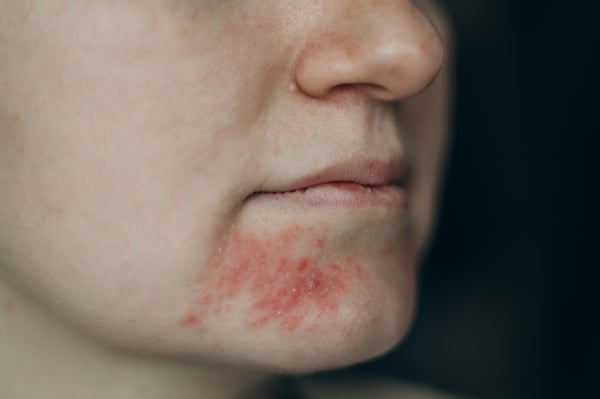
It’s easy to jump to conclusions when pimple-like bumps show up around your mouth. If it looks like acne and behaves like acne, it must be acne, right? This might seem like a logical answer, but sometimes acne or a rash around your mouth isn’t acne at all. Instead, it might be a skin condition called perioral dermatitis.
One of the most frustrating things about this condition is that it is often misidentified at first, and treating it like acne or a rash can actually make symptoms worse.
What is Perioral Dermatitis?
Perioral dermatitis is an inflammatory skin condition that most commonly shows up around the mouth, but occasionally occurs around the nose and eyes. It typically looks like small red or skin-colored bumps filled with pus or fluid, similar to acne. The skin may also be dry and flaky and there can be a burning sensation. These symptoms can also be confused with a contact rash, eczema, or rosacea.
Perioral dermatitis can happen in anyone, but it tends to be more common in women between the ages of 20 and 45. It’s not contagious or dangerous, but dealing with the symptoms can be frustrating and embarrassing.
What Causes Perioral Dermatitis?
Doctors aren’t certain what causes perioral dermatitis, but they have identified several factors that seem to be related. Some people start to notice symptoms when:
- Using topical steroid creams (like those used for common rashes) on the skin, steroids that are inhaled through the mouth or nose, or taken as a pill.
- Using heavy skin moisturizers and certain cosmetic products, or moisturizers that create a barrier on the skin that “locks in moisture.” These might be used if perioral dermatitis is mistaken for eczema, which can worsen the condition.
- Brushing teeth with a high-fluoride toothpaste.
- Changes in hormones occur.
- They have Candida albicans (a type of yeast) infection.
- They have a damaged skin barrier.
- There is an overgrowth of skin mites, called demodex mites.
Perioral Dermatitis Treatment
Treatment for perioral dermatitis depends on the cause. In some cases, stopping the use of topical steroids, harsh skin products or makeup, or fluoridated toothpaste can reverse the problem. In other cases, a dermatologist may need to prescribe a cream or antibiotic that can help you get relief. If the cause is something like a damaged skin barrier or hormones, treatment can take a while.
How to Know When A Rash or Acne Around the Mouth is Actually Perioral Dermatitis
The hardest part of treating perioral dermatitis is often simply determining that it is perioral dermatitis. Most people are more familiar with acne or certain rashes and will resort to steroid creams or harsh products like salicylic acid right away. These will most likely make the problem worse. If this happens, you might have perioral dermatitis.
The best way to find out if acne or rash around the mouth is actually perioral dermatitis is to see a board-certified dermatologist. Since the location, appearance, symptoms, triggers, and treatment history all play a role in identifying the differences between perioral dermatitis, rosacea, acne, eczema, and contact rashes, a professional examination by a dermatologist will help you figure out what is going on a lot faster. And ultimately, that means faster relief from symptoms.
Can I Avoid Perioral Dermatitis?
Some people never get perioral dermatitis even when using heavy moisturizers, fluoridated toothpaste, or even topical steroids on the face. So, it’s hard to know whether you need to avoid potential causes of it or not. However, for people who are experiencing or have experienced rashes or acne around the mouth, it’s best to avoid potential triggers, like those mentioned above.
Of course, some people need to take steroids for medical purposes, like steroid inhalers for asthma or nasal steroids for allergies. Don’t stop your medications. In these cases, it’s best to try to avoid contact with your skin, or wash off your skin after taking your medication. If avoiding direct contact with your skin doesn’t help, talk to a doctor about other medication options that don’t have steroids.
Maintaining a healthy skin barrier can also help prevent perioral dermatitis and many of the conditions it gets confused with. There are a few things you can do to protect your skin barrier:
- Don’t overexfoliate your skin
- Use a light moisturizer
- Use niacinamide
- Avoid using very hot water
- Protect your skin with sunscreen
- Get 7-8 hours of sleep and eat a healthy diet
- Drink plenty of water
If you think you might be suffering from perioral dermatitis, one of our board-certified dermatologists can help you find out what’s going on, identify triggers, and find an appropriate treatment. Find a Forefront office near you today.

Book an appointment with your trusted, local dermatologist.
Why Some Skin Conditions Don’t Respond to Over-the-Counter Treatment

Treating Acne in Skin of Color

Why Adult Acne is Different—and What Actually Helps
Acne Treatment Innovations that Could Transform How We Treat Breakouts

Back-to-School Skin Care: A Dermatologist’s Guide for Kids, Teens, and Young Adults

Acne Scars: How Common are They, and What Can be Done for Them?