
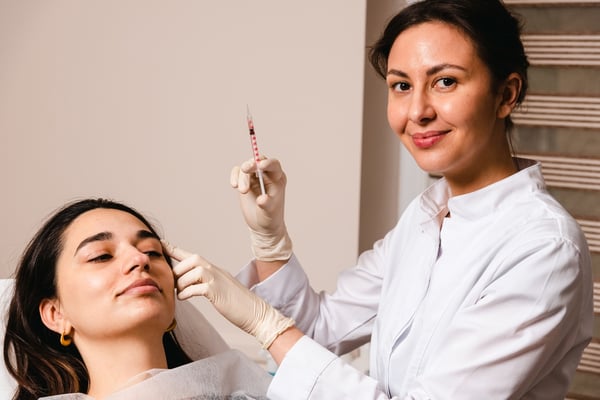
Whether it’s a beauty influencer on TikTok or maybe just your friends in the neighborhood, you’ve likely heard about “preventive Botox®,” a growing trend for more and more people in their 20s and 30s. What’s often known as “baby Botox®” in some marketing, the trend is rapidly growing: The American Society of Plastic Surgeons reported a 71% increase in neuromodulator injections (like Botox®) in adults aged 20 to 29 between 2019 and 2022.
The idea sounds simple enough: Begin neurotoxin injections early to stop wrinkles before they form. Yet, dermatologists approach prevention a bit differently than the internet often suggests.
For some people, early treatment can make sense. But for others, starting injections too early may not meaningfully change long-term aging. It’s important to understand when to start preventive Botox® and what prevention actually means so you can make a thoughtful, personalized decision instead of jumping blindly onto the latest trend.
Factors that influence wrinkle development
Beyond just age, wrinkle formation is influenced by a combination of factors, and understanding these helps explain why some people develop lines earlier than others and why prevention is never one-size-fits-all:
- Facial anatomy – Bone shape, fat distribution, and the way muscles attach beneath the skin all influence where lines form and how noticeable they become.
- Muscle strength and movement patterns – Some people simply have stronger or more active facial muscles. If you frown with intensity, raise your brows frequently, or squint often, those repetitive movements can create creases earlier in life.
- Sun exposure and UV damage – Sunlight breaks down collagen and elastin, the proteins that keep skin firm and smooth. Even with neurotoxin treatment, unprotected sun exposure can lead to fine lines, texture changes, and deeper wrinkles over time.
- Skincare habits – Consistent sunscreen use, retinoids, antioxidants, and moisturizers help maintain collagen, support skin repair, and improve overall texture. These habits often work hand-in-hand with neurotoxin treatments and, in some cases, may be more impactful than starting injections early.
When preventive Botox® treatment makes sense
As a reminder, Botox® is just one type of injectable in the broader category of neurotoxins. While the name can sound scary, these drugs are safe, injectable formulations that temporarily smooth wrinkles by relaxing targeted facial muscles.
Neurotoxins don’t halt aging or freeze the face in time. Instead, they work by softening the repetitive muscle movements that eventually etch lines into the skin. Dermatologists think about wrinkles in two categories: dynamic lines, which appear only when you make an expression, and static lines, which remain visible even when your face is at rest. Prevention in this case is really about slowing that transition from dynamic to static lines — not eliminating every crease or expression.
While preventive Botox® isn’t necessary for everyone, there are situations where starting Botox® in your 20s or early 30s can be genuinely helpful.
Some people are naturally more animated than others. So, if you have a very expressive forehead or deep “11s” between your brows when concentrating, those repetitive movements can start creating creases earlier in life. In these cases, a light and conservative application of neurotoxins can soften the intensity of movement and reduce the likelihood those lines become deeper over time.
You may also be seeing faint lines that linger after you stop smiling, frowning, or raising your brows, which is a sign your skin is beginning to form static lines. Early treatment can slow that progression.
Of course, certain lifestyle and environmental factors can accelerate collagen breakdown, making wrinkles form more quickly. These include:
- Frequent sun exposure or outdoor work
- A history of tanning
- Not consistently using sunscreen
- Frequent squinting due to bright light or uncorrected vision
- Smoking (which can create wrinkles around the mouth)
For patients with these risk factors, early neurotoxin treatment may play a supportive role in a broader prevention plan.
When starting early may not provide much benefit
Preventive Botox® isn’t automatically the best choice for everyone in their 20s or early 30s. Dermatologists look closely at how your face naturally moves and what your skin is showing before recommending early treatment. In many cases, a “wait and watch” approach is just as effective and far more appropriate for certain situations:
- Minimal or no visible lines – If your expression lines disappear immediately after you stop smiling, frowning, or raising your brows, your skin isn’t yet showing signs of early static wrinkles. In this situation, starting neurotoxin injections too early can lead to unnecessary cost without a clear benefit.
- Naturally low muscle movement – When muscle movement is naturally mild, the risk of early etched-in lines is lower, and dermatologists may recommend monitoring rather than treating.
- Unrealistic expectations – Sun exposure, genetics, collagen loss, and overall skin quality play major roles in wrinkle formation. While Botox can’t prevent those effects, sunscreen and a healthier lifestyle may offer benefits. If someone expects early Botox® to guarantee wrinkle-free skin for decades, a dermatologist will help recalibrate those expectations and build a more comprehensive prevention plan.
What to expect with Botox® for wrinkle prevention
Deciding when to start Botox® treatment isn’t about following a trend or hitting a certain age milestone. Dermatologists take a thoughtful, individualized approach that looks at how your face moves, what your skin is showing, and what your long-term goals are.
When determining if Botox® is right for you, your dermatologist will begin by assessing your face both at rest and in motion to identify where dynamic lines are forming, whether any early static lines are appearing, and which muscles are contributing most to movement. They also consider skin quality, sun exposure, lifestyle habits, and genetic factors to determine whether early neurotoxin treatment will meaningfully support prevention or whether monitoring is the better choice.
If early treatment is appropriate, dermatologists typically start with the lowest effective dose with the goal of subtle softening. Over time, dosing can be adjusted based on how your muscles respond and how your goals evolve.
Even when used thoughtfully, however, neurotoxins have specific strengths and limitations. Preventive Botox® works best when it’s part of a broader skin strategy. Your dermatologist’s role is to guide you toward the right intervention for you, one that supports healthy, natural-looking results for years to come.
If you’re ready to learn if preventive neurotoxin treatment is right for you, reach out to a Forefront location near you!

Book an appointment with your trusted, local dermatologist.

