

Men often assume they don’t need to follow a daily skincare regimen. They might wash their face in the shower with a bar of soap, or skip washing at the end of the day (after all, there’s no makeup to wash off). And even those that do want to follow a regimen will quickly discover the overwhelming number of options and advice.
The truth is that skin is skin, no matter which gender you identify with. It requires care, not just to look good but for overall health. In fact, men are even more at risk than women when it comes to certain skin concerns.
If you’re struggling to figure out what really matters when it comes to caring for your skin, our dermatologists have a few men’s skincare tips to get you started.
DO learn your skin type
It’s difficult to develop a skincare routine without knowing what your skin needs. The American Academy of Dermatology (AAD) recognizes five primary types of skin: normal, oily, dry, combination, and sensitive. The first step is to determine which skin type you have so you can tailor your regimen to meet your specific needs.
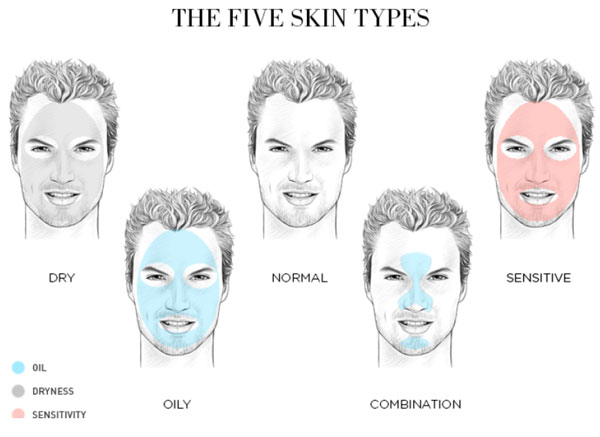
- Normal skin feels hydrated but not oily, pores are fairly small, and skin feels smooth. Even though normal skin doesn’t typically get oily, you should still look for non-comedogenic products that won’t clog pores and cause acne.
- Oily skin is characterized by excess sebum (oil). This can make skin appear shiny or greasy, especially on the forehead, nose, and chin. It can also lead to large pores or blackheads, since oil tends to clog pores. People with oily skin should avoid oil-based skincare products.
- Dry skin doesn’t produce enough natural oils to lubricate the skin, so it appears rough, flaky, or scaly. Skin might also be itchy and feel tight. If you have dry skin, you will need products that lock in moisture.
- Combination skin has some areas that are oily (usually the forehead, nose, and chin), and some that are dry (usually the cheeks). If this is you, you will need to use products that address both issues.
- Sensitive skin becomes red or irritated when it comes in contact with certain ingredients or fragrances, as well as pollutants in the environment. Research suggests that people with sensitive skin have a compromised skin barrier, so it’s important to avoid products with chemicals that cause discomfort or trigger hives.
Sometimes it’s easy to tell what type of skin you have, but it’s not always black in white. For instance, even people with dry or combination skin can deal with sensitivities. It’s best to see a dermatologist for the most accurate diagnosis.
DON’T use a body cleanser on your face
A bar of soap or body wash is not formulated for facial use. The skin on the body is thicker and generally dryer, so it can handle a cleanser with moisturizing attributes. But skin on the face is thinner and more delicate. It requires a special formula without harsh chemicals; one that won’t strip too much oil away but still remove dirt and dead skin cells from pores. Washing the face with a gentle glycolic foaming face wash in the morning and at night works best for most skin types.
If you have oily, acne prone skin, try incorporating a salicylic acid cleanser once a day. But if your skin gets too dry or breakouts aren’t clearing up, talk to your dermatologist for a better recommendation.
Do exfoliate
For some men, cleansing alone isn’t enough to clear pores. A higher level of testosterone means men produce more sebum (oil) than women, making them more likely to have clogged pores and acne breakouts. Exfoliating with a gentle scrub two to three times per week can be effective at pulling out dirt and dead skin cells, which can reduce breakouts and make pores appear smaller. Just be mindful if you start to notice redness, stinging, flaking, or peeling after exfoliating, as you might be doing it too often or using the wrong product for your skin type.
For a pore-clearing experience that also improves skin hydration, consider a hydrafacial once a month.
DON’T choose products based on their scent
Scented products, like moisturizers or shaving creams, can smell really great. However, it’s important to recognize that fragrances can be harsh on skin, and cause an allergic reaction even days after using them. If products that smell good don’t seem to bother you, then by all means keep buying them. But if burning or itching occurs after even just one use, switch to a fragrance-free option.
DO buy the right razor
Just as men’s skincare products should be formulated for your skin type, your razor should work specifically for your facial hair coarseness and skin sensitivity. For some men, multi-blade razors shave too closely, causing ingrown hairs or razor burn. If your hair is coarse or you get razor bumps frequently, try a single- or double-blade razor.
Always shave while the skin is moist (ideally right after showering or even in the shower). Using a moisturizing shaving cream, shave in the direction of hair growth. Make sure to rinse the razor after each swipe, and change the blade after five or six uses to minimize irritation.
DON’T forget to moisturize
Well-hydrated skin can help reduce the appearance of fine lines and wrinkles, so you should be wearing a moisturizer every day. Moisturize after shaving, when skin is still slightly damp to help seal in moisture, and just before sunscreen. Most face lotions are oil-based, which works well for guys with normal skin, but if your skin is oily or prone to breakouts, look for a water-based product.
DO check your skin regularly
When caught early, skin cancer is highly treatable. This is why it’s crucial to take note of any new moles that itch, bleed, or change color, which are often early warning signs of skin cancer. The ADD’s skin cancer body mole map is a handy tool to record any changes you see, so you can report them to your dermatologist.
DON’T forget the sunscreen
No matter how long you plan to be outdoors, sunscreen should be a daily priority. Not only do the sun’s rays speed up the aging process by slowing down collagen production and forcing skin to lose its elasticity; they also cause skin cancer — and men are more likely to get it than women. In fact, according to the American Association of Dermatology, men over 65 are twice as likely to die from melanoma than women, and three times as likely after 80. Yet in a recent online survey of over 700 men aged 20–70, 83% reported not using sunscreen on a daily basis.
A great way to remember to put sunscreen on is to purchase a daily moisturizer with SPF 30 or higher. Also, if you use chapstick, make sure it contains sunscreen, too.
DO see a dermatologist
A semi-annual visit to a board-certified dermatologist at Forefront will ensure that you maintain a clear complexion and have healthy skin as long as possible. During your appointment, you can discuss concerns regarding breakouts, shaving irritation, skin cancer, and the best options for combating signs of aging.
If you have concerns about the health or appearance of your skin, schedule a visit with your local Forefront dermatologist to discuss how we can help.
Related Articles men's skincare - men's skincare tips - skin types - skincare regimen -

Healthy Food Choices for Healthy Skin

Best Skincare Routine for Men

Breaking the Flare Cycle: How Modern Eczema Care Supports Your Skin’s Ecosystem

Is “Glass Skin” Good or Bad?

Hormonal Skin Changes, From PMS to Perimenopause