
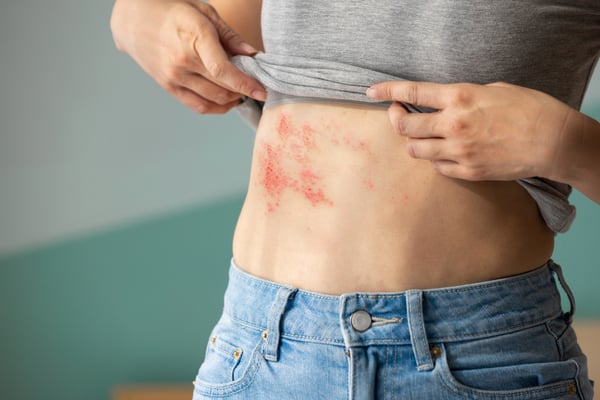
Finally, after weeks of applying lotions and ointments you bought at the drugstore, the itchy red bumps are gone.
But wait – it’s only been a few days and they’re back again! What’s going on?
Most likely, the recurring rash you’ve been treating is not just due to skin sensitivity, but rather an allergic skin reaction or immune disorder. This means it won’t permanently go away with over-the-counter treatments like hydrocortisone cream or oatmeal baths, and will instead keep coming back until the root cause is treated.
But first, an accurate diagnosis is key to identifying that root cause.
Why do some rashes become chronic?
The problem with topical fixes is that they aim to control the symptoms that rashes cause, such as itching and inflammation. However, they don’t address the reason the rash appears in the first place, which is usually one of six things:
An allergic skin reaction. When the body senses that a substance is harmful to it (even if it really isn’t), the immune system releases a protective chemical called histamine. This leads to redness, itching, and swelling. If a patient continues to be exposed to the allergen, the rash will keep coming back.
An auto-immune response. A chronic skin rash can be an outward sign of an internal condition where the immune system attacks the body’s own tissues. Examples include lupus and kidney or liver diseases. Taking medications such as corticosteroids that reduce flare-ups can keep rash breakouts at bay.
An infection. Certain bacterial, viral, or fungal infections can lead to long-standing rashes (such as strep, mono, and hand-foot-mouth disease). Once the underlying infection is treated with antibiotics, the rash typically subsides.
Stress. High stress levels can worsen certain rashes, such as hives or eczema flare-ups. Adopting calming relaxation measures can help.
Medications. Some over-the-counter or prescription medications, such as penicillin, cause drug rashes. Because the release of histamine is often the culprit, taking an antihistamine can resolve the rash. However, it’s sometimes necessary to switch medications in order to eliminate rash breakouts.
Photosensitivity. This is a sensitivity to sunlight, and can lead to an itchy rash and blisters on the skin after spending time outdoors. The rash can be prevented by avoiding the sun or wearing sunscreen when outside.
How do dermatologists diagnose the reason for chronic skin rashes?
Simply eliminating certain foods from your diet, switching cosmetic products, reducing stress, or switching medications can keep some chronic skin rashes from returning. But to take the guesswork out of the equation, dermatologists can use advanced diagnostic tools. These tools may include:
- Prick or patch testing (also called allergy testing or contact dermatitis testing). For this kind of test, a doctor applies tiny needles or patches containing small amounts of common allergens to the patient’s back, and then evaluates the reaction of the skin. Areas that are raised show sensitivity to certain substances, such as metals, rubber, and cosmetics.
- A skin biopsy. A dermatologist can take a small sample of the patient’s skin or tissue to test in the lab for the presence of a virus, bacteria, or another skin condition such as psoriasis.
- Blood tests. Some skin diseases can be caused by antibodies in the blood or a systematic illness. Blood tests can determine where the illness lies so it can be treated with prescription medications. Blood tests can also reveal deficiencies in Vitamin D, Zinc, Iron, and Vitamin A, any of which can cause dry skin or psoriasis.
What are some common types of chronic rashes, and how can a dermatologist help?
Contact dermatitis
Around 20% of people will experience contact dermatitis at some point in their lives. There are two main types: allergic and irritant.
Allergic contact dermatitis causes an immune system reaction when the skin touches something the patient is allergic to, such as poison ivy. A rash can appear immediately or up to two days later.
Irritant contact dermatitis is a non-immune reaction that happens when skin cells are damaged when exposed to irritating substances. A rash can show up within minutes or hours after contact with triggers such as soaps, detergents, and household cleaners. When babies get diaper rash, it’s because their skin is inflamed from the moisture, urine, or feces in the diaper.
Symptoms of contact dermatitis include:
- An itchy rash or dry, scaly patches. Severe itching can cause intense scratching that causes skin to bleed.
- Patches that can be red, purple, brown, or gray, depending on the patient’s skin color.
- The spots appear wherever skin comes in contact with the irritant or allergen.
Contact dermatitis rashes usually clear up in a few weeks and can be soothed with anti-itch medications, but if a person continues to come in contact with whatever triggered the rash, the problem will persist. A dermatologist can perform contact dermatitis testing to help determine what the trigger is so the patient knows to avoid it.
If a substance can’t be avoided, such as when an allergic hairdresser must use hair dye at work, a dermatologist may prescribe medications to help the immune system better tolerate it. Treatment may include:
- Topical prescription medications applied to the skin
- Biologic prescription medicines given by injection
- Oral prescription medications, taken by mouth in the form of a pill
Atopic Dermatitis
Also known as eczema, atopic dermatitis is often genetic and begins in childhood. In some people, it’s related to a gene variation that weakens the protective skin barrier, so the skin doesn’t retain moisture or protect against bacteria, irritants, and allergens. Sometimes, it’s caused by too much of the bacteria Staphylococcus aureus on the skin. Roughly a quarter of patients with atopic dermatitis also have asthma.
Symptoms of atopic dermatitis include:
- Intense itching (pruritus).
- Dry, cracked, scaly, or bumpy skin.
- Red, purple, brown, or gray skin discoloration (varies by skin tone).
- Small, fluid-filled blisters that ooze and crust.
- Thickened, leathery skin from chronic scratching.
- Rashes usually appear inside the elbows, behind the knees, and on the face.
Because eczema is often genetic, it’s difficult to eliminate flare-ups altogether. However, dermatologists can help patients stay more comfortable by:
- Teaching patients how to properly moisturize the skin, which helps to minimize flare-ups
- Identify common culprits that irritate the skin, such as certain fabrics, harsh soaps and certain detergents
- Prescribing topical, oral, and injectable corticosteroids that reduce inflammation
- Prescribing calcineurin inhibitors, which reduce the immune system’s response to allergens and irritants that trigger flare-ups
Hives
Hives (also called urticaria) are bumps on the skin that appear as a reaction to something. There are two types of hives:
Acute hives form when the skin comes in contact with something, such as a cold ice pack.
Spontaneous hives form when the body releases histamine during allergic reactions, triggered by foods, medications, insect bites, or environmental allergens such as pollen. They can also form due to an infection such as strep throat, or even stress.
Symptoms of hives include:
- Raised bumps and patches on the abdomen, back, chest, buttocks, upper arms or legs
- Intense itching, burning, or stinging
- Some hives feel warm to the touch
- Swelling called angioedema in severe cases, which can affect the eyelids, lips, tongue, or throat — which calls for immediate medical attention
Most hives go away within a few weeks, but some last longer or keep coming back. Cutting out certain foods or switching medications may help to pinpoint what’s causing the hives, but a dermatologist will often recommend clinical testing to determine the cause. About half of the time, it’s impossible to tell.
When the cause is unknown, a dermatologist will suggest these treatments to minimize breakouts:
- Prescription medications that calm the immune system, such as omalizumab (Xolair) and remibrutinib (Rhapsido)
- Stress reduction techniques, like meditation, mindfulness, yoga, or deep breathing
- Skincare products that won’t make flare-ups worse, such as fragrance-free cleansers and hydrating moisturizers
Forefront’s board-certified dermatologists are here for long-term rash relief
Forefront Dermatology’s combination of medical expertise and access to advanced allergy testing helps patients find the reason for their chronic itching and irritation —not just temporary comfort. When you visit our board certified dermatologists, we will conduct a detailed analysis of your health history and perform any testing needed to determine what’s causing your rash, and then formulate a plan to offer relief. Find a Forefront office near you to get started right away.
Related Articles allergic skin reaction - chronic skin rash - contact dermatitis testing - dermatologist for eczema -

GLP-1 Drugs Need Proper Medical Monitoring for Safe and Effective Use

Healthy Food Choices for Healthy Skin

Aging, Region by Region: How Different Areas of Your Skin Tells Different Stories

How Air Quality Impacts Your Skin More Than You Think—And What to Do About It

Breaking the Flare Cycle: How Modern Eczema Care Supports Your Skin’s Ecosystem