
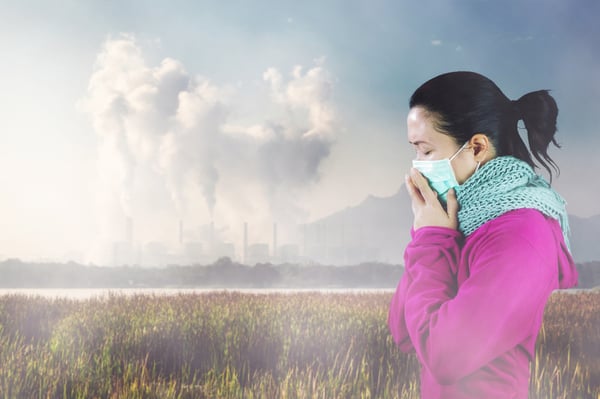
For many of us, checking the weather forecast also includes a glance at the air quality index, especially if we suffer from seasonal allergies or respiratory issues. But the same pollutants and particulates that may make it hard to breathe can also do a number on your skin.
The skin is the body’s first point of contact with the environment, which means everything in the air interacts with your skin barrier—the outermost layer of the epidermis that helps keep irritants out and moisture in. Those interactions can lead to dryness, irritation, inflammation, clogged pores, and flare ups of conditions like acne, eczema, and rosacea. Because these shifts often happen gradually or during routine parts of daily life, it’s easy to overlook the connection.
Common causes of poor air quality that affect your skin
One of the most common causes of poor air quality is urban living and traffic exposure, where even short commutes can expose your skin to higher levels of pollution than you might realize. Wildfire smoke is also increasingly becoming a threat to air quality across the United States.
Even seasonal changes can play a role, as dry winter air pulls moisture from the skin and weakens that barrier, while humid summer air can trap pollutants on the skin’s surface.Travel is also a primary culprit, as your skin is forced to deal with super-dry airplane cabin air, sudden humidity changes, and new kinds of pollutants and allergens from unfamiliar environments.
Don’t forget your indoor air quality: From dust and mold to cleaning chemicals and fragrances, our indoor spaces often lack proper ventilation and can trap pollutants inside (and on your skin).
But what’s the science behind why air quality has such a profound effect on our skin? And what are some dermatology backed steps you can take to protect and strengthen your skin, no matter the forecast?
The connection between air pollution and skin
As the body’s first line of defense, your skin helps keep the good stuff in (like moisture) and the bad stuff out (like irritants and pollutants). But when the air around you is less than stellar, that barrier must work overtime. That kind of consistent exposure can weaken the skin’s structure, making it more reactive, dry, or inflamed. It also causes the skin to appear to age more quickly.
Poor air quality is caused by a mix of microscopic particles and gases that interact directly with the skin’s surface. Some of the most common culprits include:
- Particulate matter: Tiny particles from traffic, industrial processes, and smoke can settle into pores.
- Ozone: Ground-level ozone gas contributes to oxidative stress and premature aging. Levels can spike during hot, sunny weather.
- Nitrogen dioxide and other traffic-related pollutants: These contain irritants known to worsen inflammation and sensitivity.
- Wildfire smoke: A concentrated mix of fine particles that can irritate even healthy skin.
- Seasonal allergens and environmental toxins: Pollen, mold, and agricultural pollutants can be worse in certain areas or at certain times of the year.
Once these pollutants land on the skin, they can cause what’s known as oxidative stress by generating free radicals that damage collagen and accelerate visible aging. These pollutants can also cause inflammation, which can worsen inflammatory conditions such as acne, eczema, and rosacea.
The skin barrier may also become less effective at holding moisture and blocking irritants, and the natural community of bacteria on your skin can shift, leading to irritation or breakouts. And when particulates mix with the oil and debris on your skin, clogged pores are much more likely.
How to protect yourself from the effects of air quality on skin
While you can’t control the quality of the air, you can protect yourself from the effects of poor air quality with a combination of smart skincare habits and supportive lifestyle choices:
- Remove pollutants without damaging the barrier – Pollutants cling to the skin throughout the day, so use a gentle cleanser that removes debris without stripping moisture. Try to avoid harsh scrubs, which can weaken the barrier and make skin more vulnerable.
- Strengthen your skin with antioxidants – To fight free radicals caused by pollution, use skincare products with antioxidants like vitamin C (which boosts collagen), vitamin E (which hydrates and protects), niacinamide (which strengthens the skin’s barrier and calms redness), green tea extract (which is an anti-inflammatory), and ferulic acid (which enhances the potency of the others).
- Repair and reinforce the skin barrier protection – Look for moisturizers with ceramides, hyaluronic acid, and peptides, and choose products that lock in hydration and support long term barrier repair.
- Don’t skip the sunscreen – UV exposure amplifies the effects of pollution and accelerates visible aging, so always apply a broad spectrum SPF daily, even on cloudy days.
- Seek dermatology treatments for deeper repair – If pollution has triggered persistent irritation, breakouts, or pigmentation, dermatologists can help restore balance with professional exfoliation to remove buildup, hydrating or antioxidant rich facials, laser treatments for redness or dark spots, and personalized plans for eczema, acne, or rosacea flare ups.
- Proper lifestyle habits support skin – Use an air purifier at home to reduce indoor pollutants, and avoid outdoor exercise during high pollution or wildfire smoke days. Also, make sure to shower after heavy exposure, and always stay hydrated and eat antioxidant rich foods to support skin from within.
Talk to a dermatologist for a plan tailored to your environment
Even with a solid routine, sometimes environmental stressors overwhelm the skin’s natural defenses. If you’re noticing persistent irritation, breakouts that don’t behave like your usual acne, flare ups of eczema or rosacea, or new discoloration that isn’t fading, it may be a sign that air quality changes are playing a bigger role than you realize. Dermatologists can help identify what’s driving those changes and create a plan tailored to your skin’s needs.
Air quality is an everyday part of your environment, but it doesn’t have to dictate how your skin looks or feels. With the right guidance and a proactive approach, you can keep your skin healthier, calmer, and more resilient. Find a board-certified Forefront dermatologist near you to help you overcome air quality-related skin concerns.

Book an appointment with your trusted, local dermatologist.
Why Some Skin Conditions Don’t Respond to Over-the-Counter Treatment

Dermatologist-Recommended Products for Sunburn Relief

Why Dermatologists Do Biopsies: What We Wish Every Patient Knew Before They Worried

When Skin Problems Are Actually Signs of Internal Disease

How to Know When a Skin Issue Is Urgent vs. Safe to Watch

Nutrition, Skin, and Weight Loss: Here’s What You May Be Noticing as the Pounds Fall Off