
If you have eczema, you may feel like you’ve tried everything. Moisturizers help for a while. Steroid creams calm the redness and itching—until the flare comes back again. For many people, eczema feels less like a one-time problem and more like a cycle that never truly ends.
That frustration is common. And it’s one of the main reasons dermatologists now approach eczema differently than they did even a decade ago. Today, eczema treatment is no longer just about calming irritated skin in the moment. Instead, it focuses on restoring balance to the skin itself—by teaching how it protects you, how your immune system responds, and how healthy bacteria live on the surface of your skin.
This shift has led to better options for long-term relief, especially for people dealing with recurring or hard-to-control eczema.
Eczema is not just about dry skin
Eczema affects more than 31 million people in the United States and about 20% of the population in the developed world. It causes dry, scaly skin with redness and itching, and blisters or tiny bumps with a rash-like appearance. In severe cases, the skin may develop painful cracks that bleed and form a crust.
While there are multiple types of eczema, atopic dermatitis is the most common. Atopic dermatitis usually starts as dry, sensitive skin, but that’s only part of the story. In people with healthy skin, the skin works like a shield, keeping moisture in and blocking irritants, allergens, bacteria, and viruses from getting inside the body. In people with eczema, that shield doesn’t work as well. The skin barrier is weaker, which means moisture escapes faster and irritants get in more easily. This makes the skin dry, itchy, and quick to react.
Research shows that many people with eczema have changes in the proteins that help hold the skin barrier together, making their skin more vulnerable from the start. Once the barrier is damaged, flare ups become much easier to trigger—and harder to prevent.
This helps explain why many patients notice that their eczema seems to improve with treatment, only to return again. The truth is that eczema isn’t just a surface-level problem. It involves deeper processes beneath the skin that keep flares cycling.
Underneath the redness and itching, the immune system is often more active than it should be in healthy skin. Even when the skin looks calm, low-level inflammation can still be present. That makes the skin more likely to flare again when it’s exposed to triggers like stress, weather changes, fragrances, or harsh soaps.
Traditional treatments like topical steroids reduce inflammation quickly, which is why they work well during flares. But once the medication is stopped, the underlying imbalance may still be there. This is a big challenge in chronic eczema management.
The eczema microbiome: Why skin bacteria matter
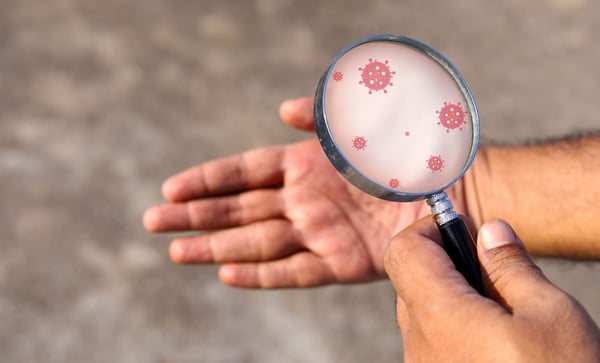
One of the biggest advances in eczema research has been the discovery of the eczema microbiome. The skin microbiome is the mix of bacteria that naturally live on your skin. And while healthy skin has a diverse balance of “good” bacteria that help protect it, in eczema-prone skin, that balance is often disrupted. During flares, certain harmful bacteria, especially Staphylococcus aureus, can become more prevalent.
This increase in harmful bacteria matters because the germs don’t just sit on the surface of the skin. They can worsen inflammation, weaken the skin barrier, and increase itching. More itching leads to more scratching, which further damages the skin and allows even more bacteria in. This connection helps explain why eczema can feel so stubborn and why moisturizing alone often isn’t enough.
Dermatologists now understand eczema as a condition involving three connected problems that can cause an ongoing cycle of flare, treatment, flare:
- A weakened skin barrier
- An imbalanced skin microbiome
- An overactive immune response
When one of these is out of balance, it affects the others. That’s why today’s atopic dermatitis care focuses on supporting all three, not just treating what you see on the surface.
New topical eczema treatments beyond steroids
One important change in modern eczema treatment is the availability of newer, non-steroidal topical medications. These treatments calm inflammation in a more targeted way without causing side effects associated with long-term steroid use and can be used safely on sensitive areas like the face and neck.
Newer, non-steroidal eczema medications such as topical calcineurin inhibitors and topical JAK inhibitors help reduce itching and redness while allowing the skin barrier to heal. For many patients, these options make it easier to manage eczema long term without relying heavily on steroids.
Biologics: Treating eczema from the inside out
For people with moderate to severe eczema, biologic medications have truly been a game changer. These treatments represent a new era in chronic eczema management because they don’t just soothe symptoms. Unlike older systemic medications that quiet the entire immune system, biologics are designed to zero-in on the specific parts of the immune system that are overactive in eczema.
Biologics are a type of monoclonal antibody that target the specific inflammatory signals involved in atopic dermatitis. For example, dupilumab (Dupixent), the first biologic approved for moderate to severe eczema, blocks receptors for the immune messengers that can cause the inflammation, itching, and skin barrier problems that are typical of the condition. By interrupting these signals, biologics calm the immune overreaction that fuels flares and help reduce redness, itch, and skin damage over time.
By calming the root cause of inflammation, these treatments can lead to fewer flares, less intense itching, and more consistent relief. For some patients, that means sleeping through the night or going weeks without a flare for the first time in years. Finally, rather than offering temporary relief, these treatments can bring about a meaningful change in how eczema affects everyday life.
Biologics are now an important option in eczema management when traditional topical treatments alone aren’t enough, especially for individuals with widespread, persistent, or severe symptoms.
Supporting your skin microbiome
While new treatments have expanded options for managing eczema, simple daily habits remain an important part of keeping skin healthy. In fact, eczema care today places more emphasis than ever on gentle, microbiome-friendly skin care.
To maintain a healthy skin microbiome, dermatologists recommend:
- Choosing mild, fragrance-free cleansers
- Regular use of barrier-repair moisturizers
- Avoiding over-washing and unnecessary antibacterial products
Researchers are also studying ways to support healthy skin bacteria directly, which may lead to new microbiome-based treatments in the future. For example, the National Institute of Allergy and Infectious Diseases (NIAID) notes that researchers are testing topical probiotics based on bacteria naturally found on healthy skin to restore microbial balance and potentially reduce eczema symptoms.
How Forefront can help
If you’ve felt stuck in a cycle of flare, treat, repeat, you’re not alone—and it’s not because you’re doing something wrong. Eczema is complex, and treating it effectively means addressing what’s happening beneath the surface.
By focusing on balance instead of short-term fixes, new and emerging eczema treatments offer renewed hope for longer-lasting relief. At Forefront, our board-certified dermatologists can help create a personalized plan that supports your skin barrier, calms inflammation, and promotes a healthier skin ecosystem.
Find a Forefront location near you today to get started.

Book an appointment with your trusted, local dermatologist.


