
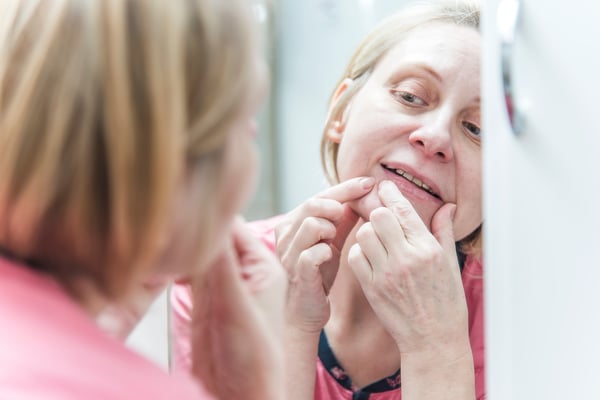
After saying “good riddance” to acne in the teen years, many grown-ups don’t expect zits to rear their ugly (black)heads ever again. But unfortunately, hormone-related skin issues continue well into adult years, with PMS acne breakouts, hyperpigmentation during pregnancy, dry skin throughout menopause, and other frustrating issues in between.
Is there ever a time when skin can just be normal?
The truth is that hormonal skin changes are normal; they’re just much easier to deal with when we understand why they happen and how to control the symptoms. A supportive dermatologist can also help manage the effects of fluctuating hormones.
Which hormones affect skin?
Some people are more prone to acne, clogged pores, or dryness, but we all have the same hormones responsible for our skin condition:
Progesterone. Progesterone rises in women after ovulation. When this occurs, it stimulates the sebaceous glands to produce more oil. This can lead to clogged pores and pimples just before your period.
Estrogen. Estrogen helps to stimulate collagen, elastin, and hyaluronic acid production, all of which help the skin to stay plump and firm. Estrogen levels rise ahead of ovulation, leaving it looking radiant, but then dip after ovulation, which can cause dryness. Estrogen levels decline tremendously during perimenopause, leading to thinner, dryer, and saggier skin.
Testosterone. This is an androgen hormone primarily produced in men, but women have small amounts of it, too. Testosterone stimulates sebum (oil) production, collagen, and hair growth. Women with elevated levels of testosterone, particularly who have been diagnosed with Polycystic Ovarian Syndrome (PCOS) will likely have clogged pores, acne, and unwanted facial hair.
Thyroid hormones. These hormones regulate metabolism, growth, and cell function throughout the body, including skin cells. They affect how well the skin retains moisture, how fast hair and nails grow, and how blood circulates through the skin. Low thyroid hormone levels (hypothyroidism) can lead to dry, thinning skin and hair loss, while high thyroid hormone levels (hyperthyroidism) can cause oily skin and hair.
Growth hormone. As we age, our growth hormone levels decline. Because they support collagen and elasticity, skin becomes thinner and less elastic when we are older.
Cortisol. The adrenal glands produce this hormone in response to stress. High cortisol production from increased stress can cause inflammation, making PMS acne and eczema worse.
Dealing with hormone-related skin issues at different times in life
It’s easy to assume we can keep using the same facial wash, shampoo, and cosmetic products as we age, but that’s not always the case. Hormones change skin (and the way skin reacts to different products) at different stages. Here’s how:
Throughout the menstrual cycle
While some women have longer or shorter cycles, skin changes in the typical 28-day cycle are usually as follows:
- On days 1-5, estrogen levels are higher, so skin is usually more clear but can be dry. This is when it’s important to use the right moisturizer and avoid procedures like waxing that could irritate the skin.
- On days 6-11, estrogen production begins, which promotes healthy cell turnover. This is a good time to use a gentle exfoliant to slough off dead skin cells.
- On days 12-16, estrogen peaks just before ovulation. Skin at this stage is usually healthy and glowing and simply requires a gentle routine of cleanser, moisturizer, and sunscreen.
- On days 17-24, estrogen levels drop and progesterone peaks, leading to oil build-up. Washing with salicylic acid can absorb some of that oil and clear pores.
- On days 25-28, testosterone production takes over, which is when you’re most likely to see breakouts. Continuing to wash with salicylic acid and using benzoyl peroxide spot treatment can help get rid of zits.
During pregnancy
Both estrogen and progesterone spike during pregnancy, so acne is a given — especially in the first and third trimesters when levels are highest. As frustrating as hormonal skin changes during pregnancy can be, it’s important that all cosmetic products and medications are safe for the baby. Gentle cleansers like Cetaphil and topical antibiotics such as clindamycin are okay, but oral retinoids (such as Accutane) should be avoided as they have been linked to birth defects.
It’s also common to see the “melasma mask” during pregnancy, which is a darkening of the skin across the face attributed to the same hormones. This is simply an overproduction of pigment (hyperpigmentation) that will fade within several months after giving birth, but you can reduce the appearance of spots by limiting sun exposure and wearing mineral sunscreen when outdoors. If the dark spots on your face don’t fade after pregnancy, talk to your dermatologist about laser treatment that addresses pigment issues.
Post-pregnancy
Acne breakouts and hyperpigmentation should gradually subside after the baby is born, but breastfeeding causes a drop in estrogen that can lead to dry, itchy skin. Drinking plenty of water can help, as well as using fragrance-free moisturizers that won’t irritate baby’s sensitive skin. And because oral medications can transfer to babies through breastmilk, it’s still important to avoid oral retinoid acne treatments (like accutene) if you’re still dealing with acne.
Perimenopause
Usually around the mid-40s but sometimes sooner, estrogen levels begin to taper off along with oil and collagen production. Perimenopause skin changes include drier skin, increased wrinkles, intense itching, and unwanted hair growth.
If you are in perimenopause, it’s common to experience dryness especially around the eyes and mouth, flaky patches on the cheeks and forehead, a dry scalp, and sensitivity to shaving. A dermatologist can recommend products that contain ceramides, glycerin, and hyaluronic acid to help lock in moisture, and help identify harsh products that can irritate dry, itchy skin.
Menopause
Around age 50, estrogen and progesterone levels reduce significantly, leading to even more dryness, wrinkles, and age spots. And after a hiatus from acne, it can return as falling estrogen allows androgens (like testosterone) to increase oil production. Most alarming is the impact on the skin barrier’s function at this stage. It has a much harder time repairing itself after sun exposure, so it’s crucial to apply an SPF30 or higher sunscreen every time you’re outside.
Women in menopause can find comfort by visiting a dermatologist who understands hormonal skin changes. Whether it’s a recommendation for a great moisturizer, a topical prescription for acne, or a laser treatment to tighten skin, a knowledgeable physician will know just what the patient needs at this stage in life.
What treatments work best for controlling hormonal acne?
Every patient’s acne is different, and treatment will depend on the severity of breakouts as well as what stage they are in life. Common recommendations include:
Topical treatments. Typically, the first line of treatment for hormonal acne are topicals. They are effective in mild to moderate cases and usually include a combination of cleansers and ointments such as retinoids, antibiotics, salicylic acid and benzoyl peroxide.
Oral medications. If topical treatments don’t work, medications taken by mouth might. Those can include:
- Antibiotics to kill bacteria that are irritating the skin and triggering breakouts.
- Hormone supplements. Oral contraceptives like birth control pills help to level out estrogen and progesterone balances to improve breakouts.
- Androgen blocking receptors. Too much testosterone (an androgen) can stimulate excess oil production and trigger acne breakouts. This medication stops that from happening.
- Isotretinoin. While it has a lengthy list of risks associated with it (including birth defects and liver problems), it is extremely effective at treating severe acne by reducing sebum (oil) production, stimulating cell turnover, and increasing the shedding of dead skin cells. With careful supervision from a trustworthy dermatologist, patients experience excellent results.
Stress reduction
Cortisol is a hormone produced in response to stress, and cortisol stimulates oil glands. This means being stressed can lead to acne or even worsen existing breakouts. Taking measures to reduce stress, such as exercising, meditating, and getting enough sleep, can lead to clearer skin.
With the right dermatologist, hormonal skin changes don’t have to be life altering
As your hormones change, so do your needs for great skincare. We’re here to help!
Our board-certified dermatologists can discuss your goals and formulate an individualized plan to meet them, whether that includes fewer embarrassing breakouts, firmer skin, or just being able to feel like yourself again. Contact us today to make an appointment near you.
Related Articles hormonal skin changes - hormone-related skin issues - perimenopause skin changes - PMS acne -
GLP-1 Drugs Need Proper Medical Monitoring for Safe and Effective Use
Healthy Food Choices for Healthy Skin
Aging, Region by Region: How Different Areas of Your Skin Tells Different Stories

How Air Quality Impacts Your Skin More Than You Think—And What to Do About It
Breaking the Flare Cycle: How Modern Eczema Care Supports Your Skin’s Ecosystem