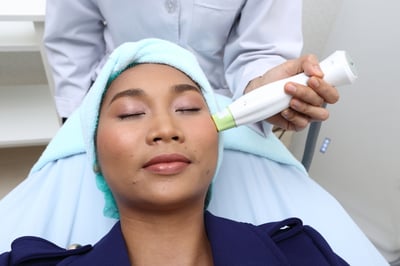
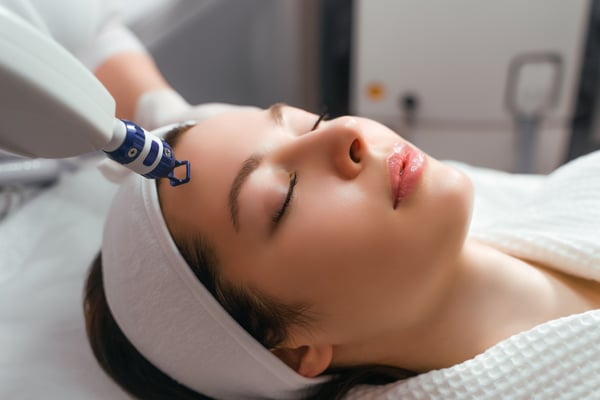
There are so many great cosmetic dermatology options out there that it can cause confusion when deciding which one will address your concerns. For example, you’ve probably heard that laser skin resurfacing is great for fixing dark spots and acne scars, but you may have heard the same thing about chemical peels. You’ve likely read that IPL (Intense Pulsed Light) is a great way to brighten your complexion with little to no downtime, but less intense lasers and chemical peels can also do that. How do you navigate the maze of lasers, chemicals, and light to determine the best skin resurfacing option for your skin? The truth is that most people and most skin issues will have multiple options that work well. The key is finding out a little more about skin resurfacing options and what to expect from each. A board-certified dermatologist can help you sort through the options and develop a personalized treatment plan that will give you the best results for your skin..
What is skin resurfacing?
Skin resurfacing procedures are a form of exfoliation, where the top layers of damaged skin are removed to stimulate new cell growth and collagen production. This improves the look of wrinkles, scars, sun spots, and other forms of discoloration, while generally giving the skin a healthy looking glow. There are many different forms of skin resurfacing treatments in cosmetic dermatology—each with different levels of intensity. Laser treatments, light-based treatments like IPL, and chemical peels are some of the most common. Even exfoliation done at home, like using a sugar scrub, is a very mild form of skin resurfacing. While skin resurfacing treatments are not permanent, results can last for years depending on how deeply the procedure penetrates into the skin. Typically, the more layers that are removed, the more discoloration, wrinkling, and scarring gets treated. Eventually, though, the new, exposed layers of skin will age and become damaged again. Sun protection and good skincare can help to keep the skin healthy longer.
Lasers vs. chemical peels vs. photofacials: How to choose the right skin resurfacing option
There is a lot of overlap in conditions that can be treated by each type of skin resurfacing, and some do a better job addressing specific issues or skin types. Here is a breakdown of what each technique can do and who it may be best for:
Laser resurfacing
Laser resurfacing uses laser light to penetrate into the skin and promote collagen production and cell turnover. Various wavelengths of light are absorbed by different molecules in the skin to target separate issues. There are three types of laser treatments: Ablative lasers remove outer layers of skin and encourage new layers of skin to form. Results are seen fairly quickly, but require one or two weeks of downtime depending on the procedure. An example is CO2 Lasers, which address fine lines and wrinkles, scars, and warts. Ablative lasers can sometimes cause permanent side effects, like issues with hypopigmentation—a condition where patches of skin become lighter than the surrounding area. This side effect is more common in people with darker skin tones. Nonablative lasers heat up the skin below the surface instead of destroying the outer layers, encouraging new collagen growth. Nonablative lasers require less downtime, but may also provide more limited results. One example is Nd:YAG Lasers, which address hyperpigmentation, tattoo removal, spider veins, haemangiomas, hair removal, and dark spots. Another example is Pulsed Dye Lasers, which address redness, rosacea, blood vessels, hyperpigmentation, port wine stains, and red scars. Fractionated lasers divide laser beams into microscopic columns, allowing the treatment of only a fraction of the skin at a time while leaving surrounding tissue intact. This speeds up healing and reduces side effects, and allows deeper penetration than traditional nonablative lasers. These are also referred to as fractional lasers, and address fine lines, texture, signs of aging, hyperpigmentation, and uneven skin tone. Laser resurfacing treatments may not be safe for people with darker skin tones, autoimmune diseases, weak immune systems, a history of keloid scars, recent radiation treatment, active acne, infections, or those who are pregnant, breastfeeding, or taking certain medications (like isotretinoin, also known as Accutane). A board-certified dermatologist can offer the best advice for other options.
Chemical Peels
Chemical peels use chemical solutions applied directly to the skin to remove the outer layers and stimulate collagen growth. Different types of solutions can be used for certain purposes, as some will only remove the outermost layers (a light peel) and others will remove deeper layers (deep peel). Most dermatologists and estheticians offer light, medium, and deep peels. Each of these can target different skin concerns: Light Peels can address uneven skin tone, dull skin, acne, and rough texture. Light peels have virtually no downtime, although there may be a sunburn-like redness on the skin and some light peeling after a few days. Medium Peels can address fine lines and wrinkles, sun damage, age spots, mild scars, and mild hyperpigmentation. Patients can expect 1-2 weeks of downtime and will experience blistering and some peeling. Deep Peels can address deep acne scars, deeper wrinkles, pre-cancerous growths, and severe sun damage. A downtime of 2-3 weeks can be expected, with blistering and significant peeling. As with other resurfacing options, staying out of the sun is important during healing after any chemical peel.
IPL Photofacials
Intense Pulsed Light (IPL) Photofacials are often lumped together with laser treatments, although they are a bit different. Lasers only use a single wavelength of light, while photofacials use broad-spectrum light (multiple wavelengths). Because of this, laser treatments tend to be more powerful and precise (and more expensive). They are better at treating a broad array of issues closer to the surface of the skin, such as:
- Freckles
- Skin tone
- Hair removal
- Milder redness and rosacea problems
- Treating active acne and mild acne scars
For most people, there is no downtime after photofacials and they are generally very safe. Some may experience slight redness for a day or so. Like laser treatments, photofacials work better for lighter skin tones and may cause hypopigmentation on darker skin tones.
What skin resurfacing won’t fix
Skin resurfacing treatments only alter the top several layers of skin, so deeper issues won’t be addressed. For example, while skin resurfacing can tighten skin to some extent, it won’t work for deep skin sagging or jowls. It may also be ineffective for very deep scars or wrinkles. Skin resurfacing also cannot achieve the kinds of plumping results that filler treatments achieve and is not generally done on sensitive areas, like lips or eyelids.
Talk to a board-certified dermatologist about the best fit for your skin resurfacing options
Whether you are looking to get rid of some old acne scars, achieve a more youthful glow, or target discolorations in your skin, there is probably a skin resurfacing option for you. Because everyone’s skin is different, the best way to find the right treatment is to have a board-certified dermatologist assess your skin to determine what option will work best (and which ones won’t be helpful). If you’re having trouble deciding between IPL vs. lasers vs. chemical peels and you’re ready to talk to a board-certified dermatologist, contact us today.
Related Articles cosmetic dermatology - laser vs chemical peel - professional skin resurfacing - skin resurfacing options -
Neurotoxins for Men: What “Natural Results” Actually Mean

Aging, Region by Region: How Different Areas of Your Skin Tells Different Stories

Is “Glass Skin” Good or Bad?

Curious About Aesthetics, But Overwhelmed By All the Options? Here are the 5 Most Popular Cosmetic Treatments for 2026
Fixing “Ozempic Face”: Addressing Facial Volume Loss the Healthy Way