

Scabies Treatment
in Vienna, VA
What is scabies?
Scabies is a common skin condition that affects millions of people each year. It is caused by an infestation of a microscopic bug called the human itch mite. This tiny mite burrows into the outer layers of skin to lay its eggs. The body develops an allergic reaction to the mites, causing a very itchy rash.
The mites can easily travel from one person to another, making scabies highly contagious. Nursing homes, schools, and childcare centers are common areas where people can get infected.
BOOK NOWHow do I know if I have scabies?
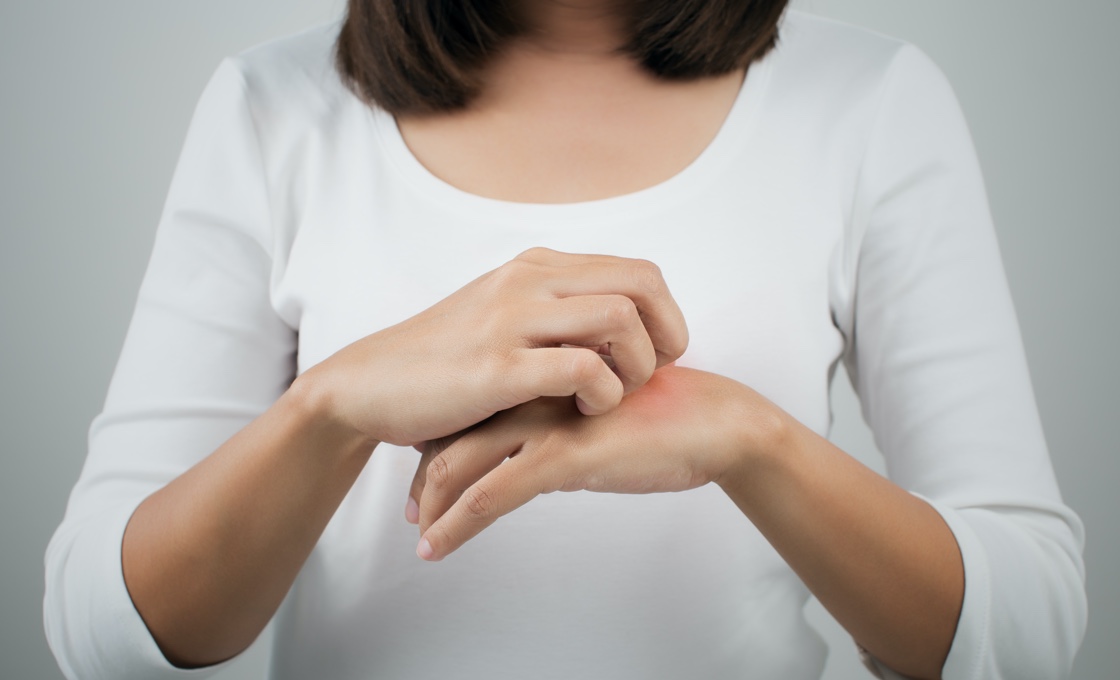
Intense itching, primarily at night, is the most common symptom of scabies. The itching is so severe that it can keep you awake at night. Other scabies symptoms include a rash of tiny red bumps. These itchy bumps often form a line on the skin and may look like hives or pimples. Frequent scratching of the itchy rash can break the skin, causing sores to develop. As the condition progresses, the skin may become crusty or scaly.
Scabies can develop anywhere on the body, although there are certain areas where the mites are more likely to burrow. The most common parts of the body to develop an itchy rash are:
- Hands, especially between the fingers and around the nails
- Waist
- Thighs
- Armpits
- Arms, particularly at the elbows and wrists
- Genitalia
- Buttocks

In babies and small children, scabies symptoms can appear anywhere on the body but are most often found on a child’s scalp, soles of the feet, or palms.
Diagnosing scabies
Seeing a dermatologist is the first step toward diagnosing scabies. Your doctor will carefully examine your skin from head to toe. To confirm a diagnosis of scabies, your dermatologist may remove a small amount of skin for examination under a microscope. If scabies mites or their eggs are detected in the skin sample, they will develop a personalized treatment plan.
Scabies treatment
Scabies can be cured with prescription medicine. Your dermatologist will likely prescribe a topical cream or lotion that works by killing the scabies mites and their eggs.
The medicine is applied from the neck down to the soles of your feet. Young children and infants may receive the topical treatment on their scalp and forehead. After a recommended period of time—usually 8 to 14 hours—the medicine is washed off.
Common topical prescription treatments include:
- 5% permethrin cream
- 10% crotamiton cream
- 25% benzyl benzoate lotion
- sulfur (5%–10%) ointment
- 1% lindane lotion
Most patients need only a single treatment to successfully eliminate scabies mites. There are times when a second application may be necessary.
Occasionally, a resistant infection won’t respond well to topical treatment. In these cases, the dermatologist may prescribe Ivermectin, an oral antiparasitic drug. With a single dose, Ivermectin is an effective treatment for resistant scabies infections.
Because it is so contagious, anyone you are in close contact with must also receive treatment. This includes everyone living in the same household and any recent sexual partners. Treating everyone you’ve been in close contact with is the only way to prevent new outbreaks of scabies.
Tips to avoid scabies and get rid of them for good
The most effective method for scabies prevention is to avoid physical contact with an infected person and their personal items, especially bedding and clothing. Scabies mites can survive for several days without being on human skin. If they aren’t removed from belongings a scabies infestation can happen again, even if you get treatment.
Wash all bedding clothes, washcloths, and towels in the hottest water possible and use the hottest setting on your dyer. Items that can’t be washed or dried can be taken to a dry cleaner or sealed in an airtight plastic bag for at least a week. You should also thoroughly vacuum your entire home.
If you have scabies symptoms, it’s important to see your dermatologist as soon as possible. Our Board-Certified Forefront dermatologists are experienced in diagnosing scabies and will create a treatment plan that works best for you. To schedule an examination, find the Forefront Dermatology location near you today.
1 Location in the Vienna, VA area
Booking an appointment has never been easier.
Available 24/7.