
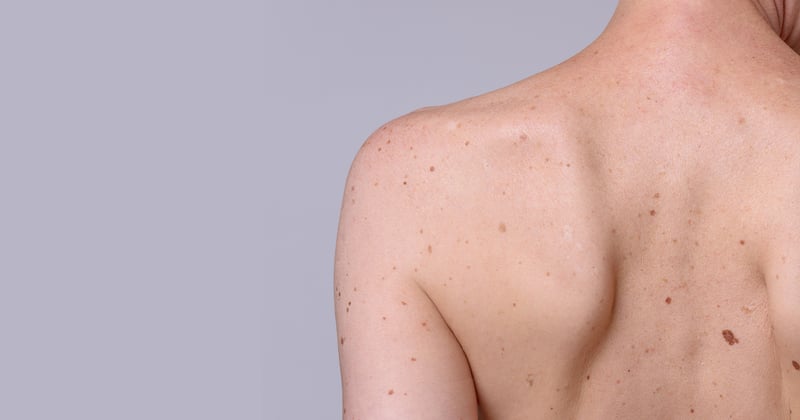
Seborrheic Keratosis
in Petersburg, VA
Seborrheic keratosis is a non-cancerous skin growth that resembles a wart or mole. Because they don’t usually appear until middle age or later, they are sometimes called the “barnacles of aging.” They are not contagious.
Although seborrheic keratosis is harmless, finding a growth can cause concern as they may look like pre-cancerous growths (actinic keratosis) or even skin cancer. For this reason, it is best to get a professional diagnosis.
REQUEST NOWWhat are the symptoms of seborrheic keratosis?
Seborrheic keratosis grows gradually and can vary in size from very small to more than an inch in diameter. Your growth(s) may have the following characteristics
- Resemble warts or moles
- Round or oval in shape
- Will be either rough and scaly or smooth and waxy, similar to a dab of candle wax
- Can be flat or a slightly raised bump
- May start out light tan then darken to brown or black
- Growths are not painful but may itch
You may have a single seborrheic keratosis growth, or you may develop several over time. They are most common on your face, neck, shoulders, chest, or back, but can pop up almost anywhere. If you have a growth on your lips, palms, or the soles of your feet, it is likely something other than seborrheic keratosis.
What causes seborrheic keratosis?
Despite its appearance, seborrheic keratosis has no relationship to skin cancer and poses no risk to your health. There is no way to prevent the condition, but some factors are thought to increase your chances of developing these growths, such as:
- Heredity. You may also inherit the pattern and location of your growths.
- Age. Growths are more common after age 50.
- Skin tone. The lighter your skin, the more prone you may be to seborrheic keratosis.
- Hormones. Changes in estrogen levels during pregnancy, menopause, or hormone replacement therapy may trigger growths.
- Sun exposure. Some studies indicate that sunlight might play a role.
Whether you have a seborrheic keratosis growth removed or not, having one increases the chances that you will have more.
Is diagnosing seborrheic keratosis difficult?
Not at all. Your Forefront dermatologist can usually identify a seborrheic keratosis simply by looking at it. Since the growths can share the characteristics of skin cancer, they may want to remove it and examine its cells under a microscope just to be sure it is benign.
Treatment for seborrheic keratosis
A dermatologist may recommend removing your growth to rule out cancer, or you may want it removed for other reasons. You may simply not like the way it looks. It can become a nuisance by catching on clothing or jewelry. Friction with clothing can also cause irritation and bleeding, and can even make the spots increase in size. If this happens, they should be removed by a dermatologist.
Seborrheic keratosis growths are superficial and do not grow deep into the skin. This makes removal easy and painless with a local anesthetic. There is typically very little scarring.
At Forefront, we use the following methods to treat seborrheic keratosis:
Cryotherapy
Your Forefront dermatologist can freeze off the growth by applying liquid nitrogen with a cotton swab or spray gun. Within a few days, it usually falls off on its own. Sometimes, a blister forms underneath the seborrheic keratosis and dries into a scab-like crust. This crust should fall off on its own as well.
Electrocautery and curettage
After numbing the growth with an anesthetic, your Forefront dermatologist uses an electric current to destroy it. Next, using a scoop-shaped surgical instrument called a curette, they scrape off the growth. There may be some minor bleeding, but you won’t need stitches. Some patients need both electrocautery and curettage, while others may need only one procedure or the other.
After removal, the skin where the growth was may be lighter than the surrounding skin, but this should improve in time. Most seborrheic keratosis growths that are removed never return, but you may get a new growth elsewhere.
Where should one go for seborrheic keratosis evaluation?
Seborrheic keratosis growths are harmless. But any sort of changing growth on your skin should be checked by a professional. Trust our team of board-certified dermatologists to provide you with the expert care you need. Find a Forefront location near you and schedule a consultation today.
1 Location in the Petersburg, VA area
Interested in Seborrheic Keratosis? Request a consultation with a skin specialist today.
*Treatment options may vary at each location.Please confirm your desired treatment is offered at your preferred location when scheduling. *Age Restriction.
For patients scheduling who are under 18 years of age (19 in Alabama and Nebraska) please make sure you have permission from your parent or legal guardian to schedule this appointment. Your parent or legal guardian must accompany you on your initial visit and on certain subsequent visits to provide appropriate informed consent.