
Warts Medical Services
in Hollister, MO
What are warts?
Warts are raised, skin-colored growths that can develop almost anywhere on the body. They often resemble a cauliflower-like solid blister. Most warts are completely harmless, but people often consider wart removal because they are painful or unsightly, and because they can spread to others.
REQUEST NOWWhat causes warts?
Certain strains of the human papillomavirus (HPV) cause warts. When your skin comes in contact with one of the viruses in the HPV family, it may trigger the excessive growth of skin cells. This makes the outer layer of your skin thicken and harden in that specific area.
Who gets warts?
Anyone at any age can get warts, but children and teens are more likely to develop them than adults. If you have any cuts or scrapes on your skin, it’s easy for the HPV virus to enter. This also explains why people who bite their nails or pick at hangnails are susceptible to warts. A weakened immune system can also lead to a higher risk of developing warts.
Warts are highly contagious and spread easily from person to person. It’s possible to get warts simply by touching a wart on another person’s body. You can even get warts from touching a surface or object that’s been in contact with a wart, for example, sharing clothing or towels with a person with warts.
Types of warts
There are several types of warts, and our Forefront dermatologist will determine the type and treatment options based on their appearance and where they appear on your body.
Common wart: This type of wart is usually small and feels like a rough bump. They’re most often found on the fingers, the backs of hands, and the skin around your nails. A common wart is typically flesh-colored, but it can also have black dots that look like seeds. These are actually tiny blood vessels, which if disrupted, can lead to bleeding.
Flat wart: Flat warts are typically smoother in appearance and smaller than other types, although they tend to grow in large clusters. It’s not uncommon to have 20–100 flat warts at a time. These warts are commonly found on women’s legs, children’s faces, and men’s beard areas.
Plantar wart: Plantar warts develop on the soles of your feet and are flat in appearance. Due to the pressure of walking and standing, they grow into your skin instead of outward. This inward growth can make it feel like you have pebbles in your shoe. Like common warts, plantar warts can also have black dots, and they may grow in clusters.
Filiform wart: These warts often grow quickly and typically develop around the mouth, eyes, or nose. Filiform warts have a spiky or thread-like appearance.
Periungual wart: Periungual warts develop under or around the fingernails and toenails. Although they start small, they can grow to become rough, painful bumps.

Treatment options for wart removal
Most warts will eventually go away without resorting to wart removal methods. This is especially true for children, but it can be more difficult for warts to disappear in adults. It can take an untreated wart between one to five years to go away.
If you have numerous warts, if a wart hurts, or if you can’t get rid of a wart on your own, you should see a Forefront dermatologist. Our highly skilled Board-Certified dermatologists offer many treatment options for warts and will recommend the best wart removal method for you. Treatment depends on the type of wart you have and its location on your body.
These are some of the best wart removal options recommended by our dermatologists:
Cryotherapy Treatment involves freezing off the wart using liquid nitrogen. This is one of the most common wart treatment options, although more than one treatment may be necessary to remove the wart completely.
Excision: Using a scalpel, your dermatologist will cut the wart out of your skin.
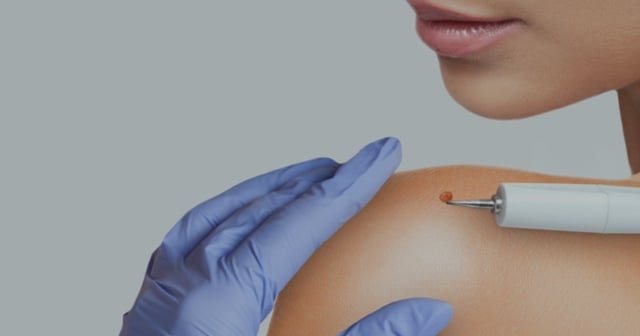
Electrosurgery: This option involves burning the wart with an electric charge delivered through a laser or the tip of a needle
Curettage: Your dermatologist scrapes off the wart with a small tool shaped like a spoon or a sharp knife.
Cantharidin: This treatment involves applying a liquid to the wart. A blister forms underneath. After about a week, the blister dries and your dermatologist can clip away the wart.
Laser treatment The dermatologist burns off the wart using a laser.
Chemical peels: An effective treatment for flat warts, a chemical peel involves applying a peeling medication to the skin, which gently removes warts from the skin’s top layer.
Antigen shots These injections boost your immune system, helping your body fight the virus that causes warts.
Photodynamic therapy Also called PDT, this treatment uses wavelengths of blue light and medications called photosensitizing agents to destroy warts.
Salicylic acid Liquids, gels, and pads containing salicylic acid work by gently exfoliating skin cells until the wart gradually disappears.
Duct tape: This home remedy for warts involves covering the wart in duct tape. By changing the tape every few days, it is sometimes possible to remove some of the wart’s layers.
1 Location in the Hollister, MO area
Interested in Warts? Request a consultation with a skin specialist today.
*Treatment options may vary at each location.Please confirm your desired treatment is offered at your preferred location when scheduling. *Age Restriction.
For patients scheduling who are under 18 years of age (19 in Alabama and Nebraska) please make sure you have permission from your parent or legal guardian to schedule this appointment. Your parent or legal guardian must accompany you on your initial visit and on certain subsequent visits to provide appropriate informed consent.