
Skin Cancer Treatment
in Florham Park, NJ
What is skin cancer?
Skin cancer is the uncontrolled overgrowth of abnormal skin cells. Unrepaired DNA damage triggers a mutation that causes skin cells to multiply quickly, forming cancer cells. Anyone can get skin cancer, and it can occur anywhere on the body, but it’s more likely to develop when your skin is regularly exposed to sunlight. Most skin cancers are highly curable.
A skin self-exam will help you become familiar with the moles and spots on your body. This will make it easier for you to spot any irregularities that could indicate the early signs of cancer. Our dermatologists recommend examining your skin about once a month.
To perform a skin self-exam, carefully examine your entire body from head to toe. Use a full-length mirror to look at your face and the front and back of your body. Using a hand-held mirror, check your scalp, back, the back of your neck, and buttocks. Don’t forget to look at your hands, between your toes, and the soles of your feet.
FIND A MOHS SURGERY CLINICSkin cancer symptoms
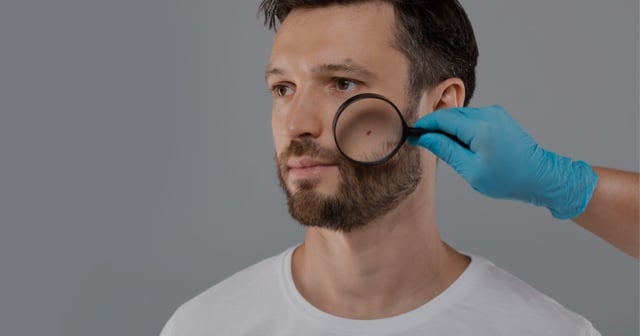
What skin cancer symptoms should you be looking for when performing a self-check of your skin at home? Any spot or mark on your skin that’s new, is different from others, or that has changed in shape, color, size, or feel. You should also pay attention to any itching, bleeding, crusting, or oozing of any spots or marks. If you notice any unusual or suspicious marks on your skin, make an appointment to see a Forefront dermatologist.
Diagnosing skin cancer
To determine a skin cancer diagnosis, your dermatologist will examine your skin, carefully looking at any spots or lesions that might be cancerous. If something looks like it could be cancerous, your doctor will do a biopsy. This involves removing a small sample of skin from the spot for further testing. A skin biopsy can determine whether or not the spot is cancerous and which type of cancer you have. This information will help you and the doctor decide on the best treatment plan.
Skin cancer types
There are three common types of skin cancer:
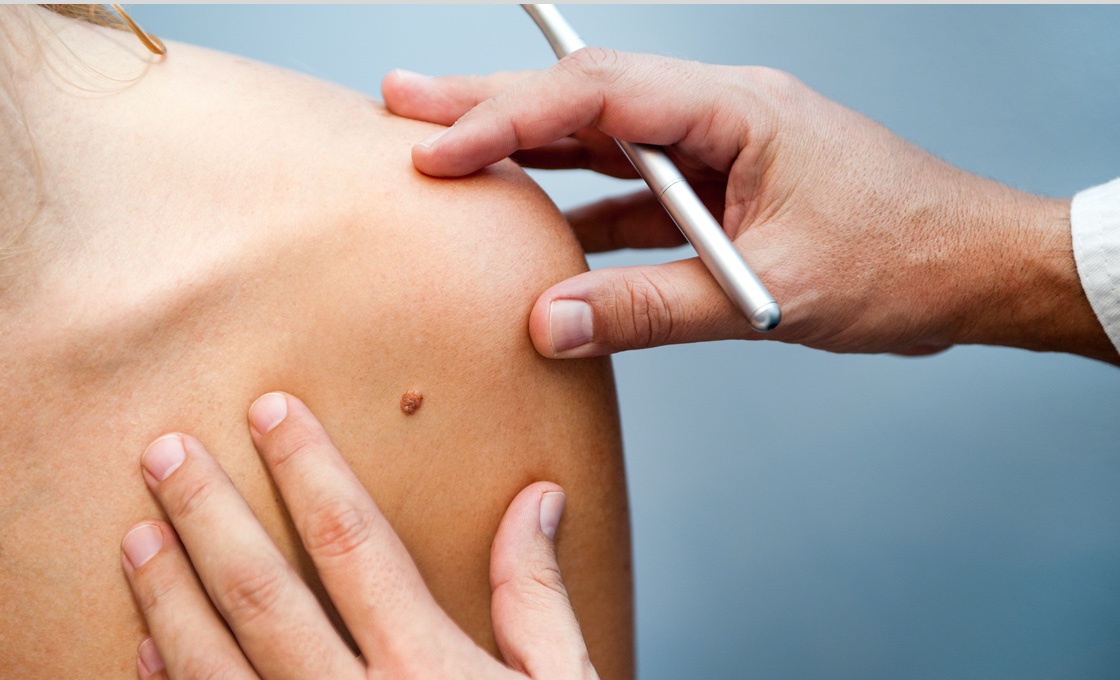
Basal cell carcinoma: This is the most common type of skin cancer. It typically grows slowly and develops most often on areas of the body frequently exposed to the sun, such as the face, neck, and head. Basal cell carcinoma usually appears as a shiny bump or nodule, pink growth, or flat brown or flesh-toned lesion.
Squamous cell carcinoma: Squamous cell carcinoma also grows slowly, but it can grow deep into the skin. It frequently develops on sun-exposed skin, including the face, ears, lips, and hands, and can appear as a scaly patch, a red bump that’s firm to the touch, or an open sore.
Melanoma: Melanoma spreads quickly and is the most serious form of skin cancer. It can develop within a mole that you already have on your skin, or it can appear suddenly as a dark spot or lesion that looks different from the rest of the marks on your skin. Melanoma can also appear as a black, blue, white, or red/pink lesion or mole. They often have a jagged or irregular border.
Skin cancer treatment options
Your skin cancer treatment options depend on the size, type, and location of the lesion. Small skin cancers found on the surface of your skin may require only minor surgery, but deeper cancers typically need more extensive treatment. Treatment options for the different types of skin cancers include:
Excision: Your Forefront dermatologist will cut away and remove the growth, closing the incision with stitches.
Cryotherapy: This treatment option uses liquid nitrogen to freeze and destroy the cancerous tissue.
Curettage and electrocautery: Your dermatologist first scrapes away the layers of cancerous tissue, and then cauterizes the area with an electric needle. This destroys any remaining cancer cells.
Photodynamic therapy: During this procedure, a combination of laser light and special chemicals is used to kill the cancer cells.
Mohs surgery for skin cancer
Also known as Mohs micrographic surgery, Mohs surgery is regarded as the most effective treatment for high-risk, nonmelanoma skin cancers like basal cell carcinoma and squamous cell carcinoma. Your Forefront dermatologist might recommend Mohs surgery if your skin cancer returns after receiving other forms of treatment. It is especially useful in treating skin cancers that are large, have uneven edges, or that are aggressive and growing rapidly. It is often recommended when cancer appears on a part of your body where it’s important to preserve healthy tissue, such as your scalp, nose, eyes, lips, ears, toes, fingers, or genitals.
Mohs surgery skin cancer treatment is performed in stages during a single visit to the office. First, your Mohs surgeon uses a scalpel to remove the visible tumor and a thin layer of the surrounding skin underneath. The area is then bandaged so you can wait comfortably while the removed tissue is examined under a microscope for cancerous cells. The procedure is repeated until all of the skin cancer has been removed.
Your Forefront Mohs surgeon may schedule a follow-up appointment with you to monitor your recovery process. They will make sure the wound is healing properly, and answer any of your questions and concerns.
1 Location in the Florham Park, NJ area
Interested in Skin Cancer Treatment? Request a consultation with a skin specialist today.
*Treatment options may vary at each location.Please confirm your desired treatment is offered at your preferred location when scheduling. *Age Restriction.
For patients scheduling who are under 18 years of age (19 in Alabama and Nebraska) please make sure you have permission from your parent or legal guardian to schedule this appointment. Your parent or legal guardian must accompany you on your initial visit and on certain subsequent visits to provide appropriate informed consent.